Northern Värmland
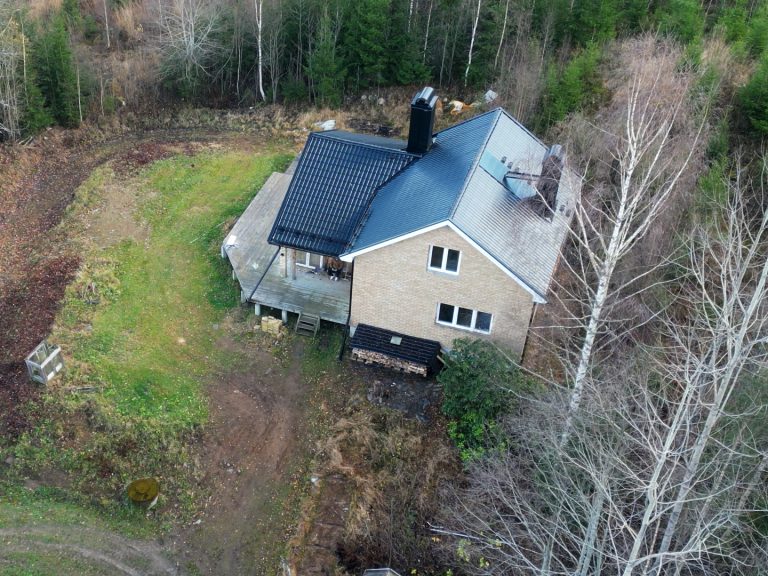
I moved from Germany to the Torsby area in 2023, deep in the forests of northern Värmland. Since then I’ve been renovating an abandoned house here and filming it for YouTube. This page is my guide to the wider area: Torsby, the Klarälven river valley, Branäs, Ekshärad, Hagfors, Finnskogen and the Norwegian side of the border.
To be honest up front: I know my own corner around Torsby best. Where I’ve been somewhere myself, I say so. Everything else I’ve looked up properly with the people who run it, so you get the facts without me pretending.
There’s something for everyone out here, and what you’ll love really depends on what you’re into. Many people come for the fishing, others for the skiing at Branäs. If you’re looking for a quiet holiday in a cabin by a lake, with forest all around and hardly anyone else in sight, this is a good place to start.
Where is northern Värmland?
Värmland is a region in western Sweden that borders Norway. Its northern half is mostly forest, lakes and rivers, with small villages and very few people. Three areas shape it:
- The Fryken valley with the long lakes of Fryken and the town of Torsby at the top.
- The Klarälven valley with the river, Branäs, Ekshärad and, close by, Hagfors.
- Finnskogen, the forest along the Norwegian border to the west.
Getting here
- Oslo to Torsby: about 170 km, 2 hours 45 minutes by car
- Oslo Gardermoen airport to Torsby: about 2 hours 30 minutes
- Gothenburg to Torsby: about 4 hours 40 minutes
- Stockholm to Torsby: about 5 hours 20 minutes
- Karlstad, the regional capital, to Torsby: about 1 hour 30 minutes
From Germany, the overnight ferries from Kiel to Oslo or Gothenburg are the easiest way. I’ve done both the ferry and the long drive over the bridges, and I prefer Kiel–Gothenburg: you get a good night’s sleep and the trip is split into easy sections. Trains run from Karlstad to Torsby, and Torsby and Hagfors have small airports with weekday flights to Stockholm. Still, you’ll want a car: most cabins, lakes and trails are out in the forest. More details in my Torsby guide.
Driving around
Distances are long, but the roads are quiet. Not every drive is pretty, though. The road from Torsby over to Ekshärad and Hagfors is mostly forest with very little to see, and to me it feels like a chore. The road between Sunne and Torsby is the opposite: you drive along Lake Fryken with a great view most of the way.
Keep an eye out for moose, especially on forest roads; I see one every now and then. There are plenty of petrol stations, even in the countryside. In winter, the main roads are cleared, but some smaller roads aren’t, so check your route before you set off.
Torsby
Torsby is the main town in the area, at the northern tip of Lake Fryken, with supermarkets, shops and everything you need for a cabin stay. It has Sweden’s first indoor ski tunnel, where you can go cross-country skiing even in summer, the Hovfjället ski area and nature reserve half an hour north, and an open-air museum and a vehicle museum in town. It’s where I do my shopping, and I like it a lot. More in my Torsby guide.
The Klarälven river
The Klarälven is Sweden’s longest river system. It rises at Lake Rogen near the Swedish–Norwegian border, flows through Lake Femunden and on through Norway as the Trysilelva, and crosses into Sweden at Långflon. From there it runs south through the whole of Värmland to Lake Vänern at Karlstad: about 460 km in total, close to 300 km of them in Sweden.
In the north the valley is narrow and wild; further south it widens, with calm water and long sandy beaches. I haven’t been out on the river myself yet, so this part comes from the operators and the tourist offices, not from my own trips.
Timber rafting
For centuries the river carried timber down to the sawmills. The Klarälven was one of the last rivers in Sweden where logs were floated, until 1991. Today you can do it yourself: you build your own raft from logs and rope, then drift slowly downstream, sleeping on the moored raft or in a tent on the riverbank.
The best-known operator, Vildmark i Värmland, offers trips from one day up to eight days. The longer trips start at Gunnerud near Ekshärad. The season runs from late spring to late summer, and it’s popular, so book ahead.
Canoeing and fishing
The calm stretches are great for canoe trips of a day or a week, with sandy beaches to camp on. Canoe rentals and guided trips are offered along the river. Fishing is one of the main reasons people come to this area at all, and the Klarälven is a well-known fishing river. Check the local fishing permit rules before you cast.
Cycling: Klarälvsbanan
Klarälvsbanan is a car-free, paved cycle path of about 90 km on an old railway line, from Karlstad up the valley to Uddeholm near Hagfors. From there, Klarälvsleden continues about 120 km further north to Sysslebäck, on smaller roads. It’s one of the easiest ways to see the valley.
Branäs
Branäs, near Sysslebäck in the north of the Klarälven valley, is one of the biggest ski resorts in southern Sweden: around 33 slopes, about 30 lifts including a gondola, and a vertical drop of about 415 metres. It’s very family-friendly and has lots of cabins to rent. In summer the valley around it is quiet and green.
I went there in the winter of 2025, not to ski, just to have a look. It was packed with people, and it’s pretty much what you’d expect from a big ski resort. Crowds aren’t my thing, so personally I’d pick a smaller place to ski. But if you want lots of slopes, lifts and everything organised for you, Branäs is the place.
Ekshärad and Brattfallet
Ekshärad, a village in the Klarälven valley, has a wooden church from 1686–1688. The churchyard is famous for its hand-forged iron crosses, around 400 of them, the oldest from the 1700s. I haven’t been inside the church, but I’ve seen the crosses. You’ll spot iron crosses in other churchyards around here too; Ekshärad just has all of them. In the Middle Ages the pilgrim route to St Olav’s grave in Nidaros (today’s Trondheim, Norway) ran along the valley through Ekshärad. A small stave church, Sankta Annas kapell, was built in 2002 in memory of it.
About 12 km north of Ekshärad, on the east side of the river, Brattfallet is a 10-metre waterfall in a deep canyon. I’ve been there twice and really like it. It wasn’t crowded either time, the forest around it is lovely, and the place just calms you down. It’s a great trip with the family: there are picnic tables, a short easy trail (about 1 km) and a 2 km forest path that suits children, and you can make a fire and grill there. Check for fire bans in dry summers. The waterfall is at its most powerful when the water is high in spring. The longer Halgåleden hiking trail starts here too; I haven’t walked that one yet.
Hagfors
Hagfors is an old steel town south-east of Torsby, close to the Klarälven valley. The steel company Uddeholm still has its main works here. Nearby Uddeholm village is a protected example of an old industrial community, with a manor, a church and workers’ houses, and Uddeholmsladan, a barn from 1940 turned into a concert and theatre venue for summer events. There’s also a railway museum in Hagfors, and lots of lakes and forest.
Honestly, I’ve been to Hagfors a few times and never really warmed to it. I can’t even say why, it just doesn’t feel like my place, and I’d pick Torsby any day. What I did enjoy is the way there: Café Sjögränd has a great view over Lake Rådasjön, right by the Klarälvsbanan cycle path, with homemade cakes and ice cream (check the opening times before you go). And you pass lots of loppis, small second-hand flea markets, along the roads.
My friend’s holiday house Lilla Skogen is in Hagfors too, so if you love lakes and forest more than town life, it’s a great base.
Finnskogen
Finnskogen, “the Finnish forest”, is the forest belt along the Swedish–Norwegian border, settled by Finnish farmers from the late 1500s on. You can visit their old farms and smoke saunas, the Finnskogscentrum museum in Lekvattnet, and hike the 240 km Finnskogleden trail across the border. Moose are everywhere, and the forest goes on for as far as you can see. More in my Finnskogen guide.
Day trips to Norway
The border is never far away, and a day on the Norwegian side is easy to fit in:
- Finnskogtoppen: a spa hotel just over the border in Grue Finnskog, about an hour’s drive from Torsby. The view from up there is unreal. It’s worth going for a spa day, and the food is good too.
- Svullrya: a small village with the Norwegian Forest Finn museum (more on my Finnskogen page). Fine for a quick stop: decent food and charming people.
- Kongsvinger: the nearest bigger town on the Norwegian side. In my opinion it isn’t anything special, and I wouldn’t drive there just to see it.
When to come
I don’t have a favourite season; every one has its own charm.
- Summer (June to August): long, light evenings and warm lakes, the season for canoeing, timber rafting and hiking. It’s short, and not too hot compared to Germany. July is the main holiday month in Sweden, so book early. Mosquitoes vary a lot from year to year; ticks, wasps and hornets are worth watching out for.
- Autumn (September and October): beautiful colours, gloomy and cosy weather, berries and mushrooms, and almost no other tourists.
- Winter (December to March): snow, skiing at Branäs and Hovfjället, dog sledding and snowmobile tours. My first winter here went down to −34 °C. It’s harsh but absolutely beautiful, with magical sunrises and sunsets, and the snow brightens the dark days. Normal hiking is hardly possible then, so walks stick to cleared roads unless you have skis or snowshoes. I’ve seen the northern lights here, but honestly only through my phone camera; for the real show with the naked eye you need to go further north. Pick a well-insulated cabin.
- Spring (April and May): the snow melts, the rivers run high and everything comes back to life. Quiet, but some places are still closed.
Good to know: the right to roam
In Sweden you’re allowed to walk, swim, pick berries and mushrooms and even camp for a night almost anywhere in nature. This is called allemansrätten, the right of public access. Keep your distance from houses, leave no trace and be careful with fire, especially in dry summers when fire bans are common. More tips in my guide to renting a cabin in Sweden.
Where to stay
All my tips and recommendations are on the Where to stay page. For families I recommend Lilla Skogen in Hagfors, run by a friend of mine: a whole house for up to 5 guests, a short walk from Lake Värmullen, with a canoe, a trampoline, a climbing wall and a playground in the garden.
I’m also planning my own holiday cabin near Torsby. Follow along on YouTube to see it happen, or get in touch if you have questions about the area.
Northern Värmland FAQ
What is northern Värmland known for?
Forest, lakes and space: the Klarälven river and its timber rafting, fishing, the Branäs and Hovfjället ski areas, Torsby’s ski tunnel, and the Forest Finn heritage of Finnskogen.
How long is the Klarälven?
About 460 km from its source at Lake Rogen to Lake Vänern, close to 300 km of it in Sweden.
Can you still go timber rafting on the Klarälven?
Yes. You build your own log raft and drift downstream for one to eight days. Trips run from late spring to late summer.
Is Branäs busy?
In the winter season, yes. When I visited in winter 2025 it was packed. If you prefer quiet slopes, look at a smaller ski area.
Can you do a day trip to Norway from Torsby?
Easily. The border is about an hour’s drive away. My tips are the Finnskogtoppen spa hotel for the view, a spa day and good food, and a quick stop in Svullrya.
Can you see the northern lights in Värmland?
Sometimes, but it’s rare. You need a clear, dark night and strong solar activity. I’ve caught them here, but only on my phone camera; to see them clearly with your own eyes, go further north.